1. How would you describe yourself in 3 words, and why?
I’d say I’m anxious but responsible. One definitely comes from the other. I’m also very meticulous: I adore when everything works perfectly, because if it doesn’t, to me it feels like it doesn’t work at all. Also, I have a strong sense of justice. I’m friendly, though a bit reserved when meeting new people. Speaking about myself is probably the most challenging task.
2. You studied German philology but eventually moved into IT. What helped you make that transition, and what motivates you now?
I’ve always been driven by the desire to understand things I don’t yet know. After completing my degree in translation, I realized I needed a new challenge. So I started looking for a place where my linguistic background could be useful without a technical degree.
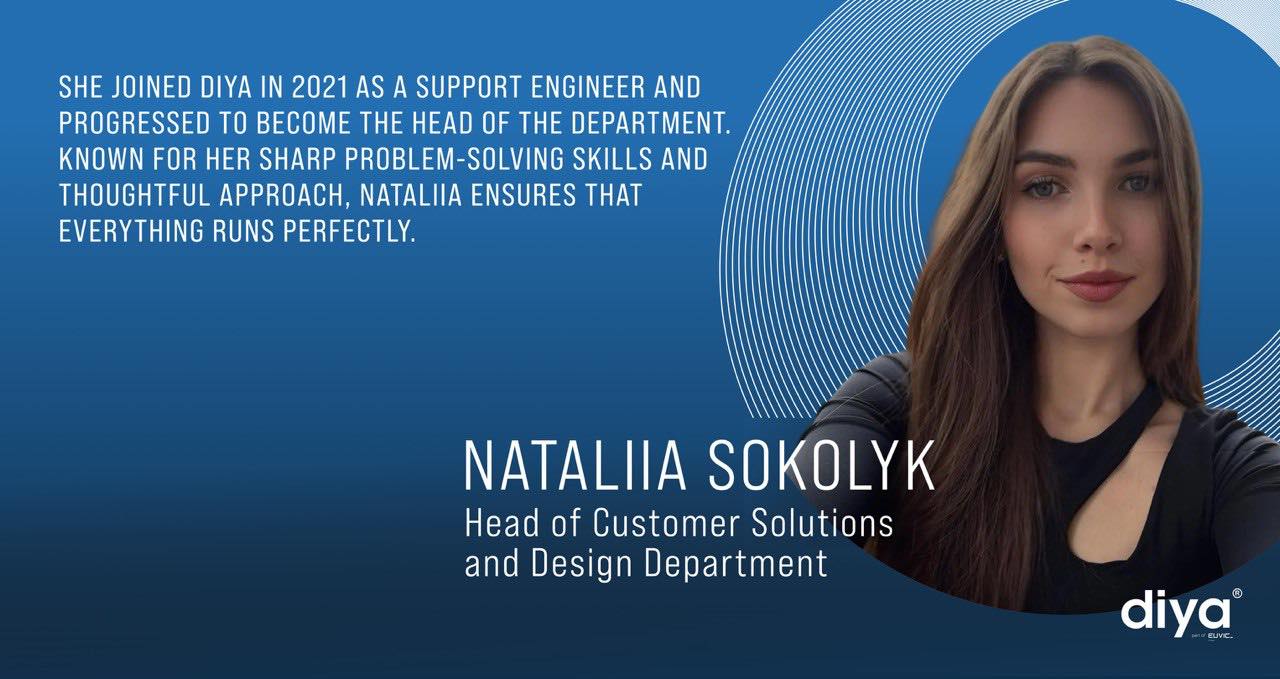
Joining Diya happened naturally and very quickly. I started in German-speaking customer support and met so many great people, many of whom I’m still close with, even four years later. I learned a lot. When that project ended, I moved to the English-speaking shared team with a 24/7 schedule. Then we got a major client, and it was a turning point. We were all nervous, but it worked out. Becoming a team lead revealed a whole new aspect of the job: mentoring. At some point, I felt I had learned everything I could in support.
After that, the two departments merged, and I became the Head of the Department of Customer Solutions and Design. Once again, new challenges, new knowledge. That constant movement is exactly what keeps me going.
3. What makes the Department of Customer Solutions and Design unique?
Everything. What makes it unique is the way these two areas complement each other. Design and customer support are both essential parts of the customer journey. A user may first be attracted to a well-designed website, which encourages them to explore and make a purchase. But if something goes wrong, customer support becomes the next point of contact, and it represents the company as much as the visual experience does.
For a business to succeed, both aspects need to work in harmony. The customer should feel satisfied both when interacting with a product visually and when communicating with support. Thoughtful communication can turn a one-time user into a loyal customer who stays with the brand long-term.
4. Is there any customer feedback that has stayed with you and inspired you?
It’s hard to single out just one, because I value every client equally. I recall a moment from my time in customer support when a client came in with a serious complaint. I didn’t offer a miraculous solution, but listened carefully and addressed their concerns calmly. In the end, they said, “I was very angry at first, but thank you for listening and helping me. I’ll continue using your services.”
In my management role, any good feedback is meaningful, mainly when it’s directed at my team. Seeing their work appreciated motivates both them and me. Customer support often works behind the scenes, so receiving feedback that shows the impact of that work is something I truly value.
5. What inspires you most in your work?
Seeing tangible results. When processes run smoothly, people feel comfortable in their roles, and everything works like a Swiss watch, with everyone in the right place, including myself.